
Case study

Rebuilding the home of infant & early childhood mental health consultation
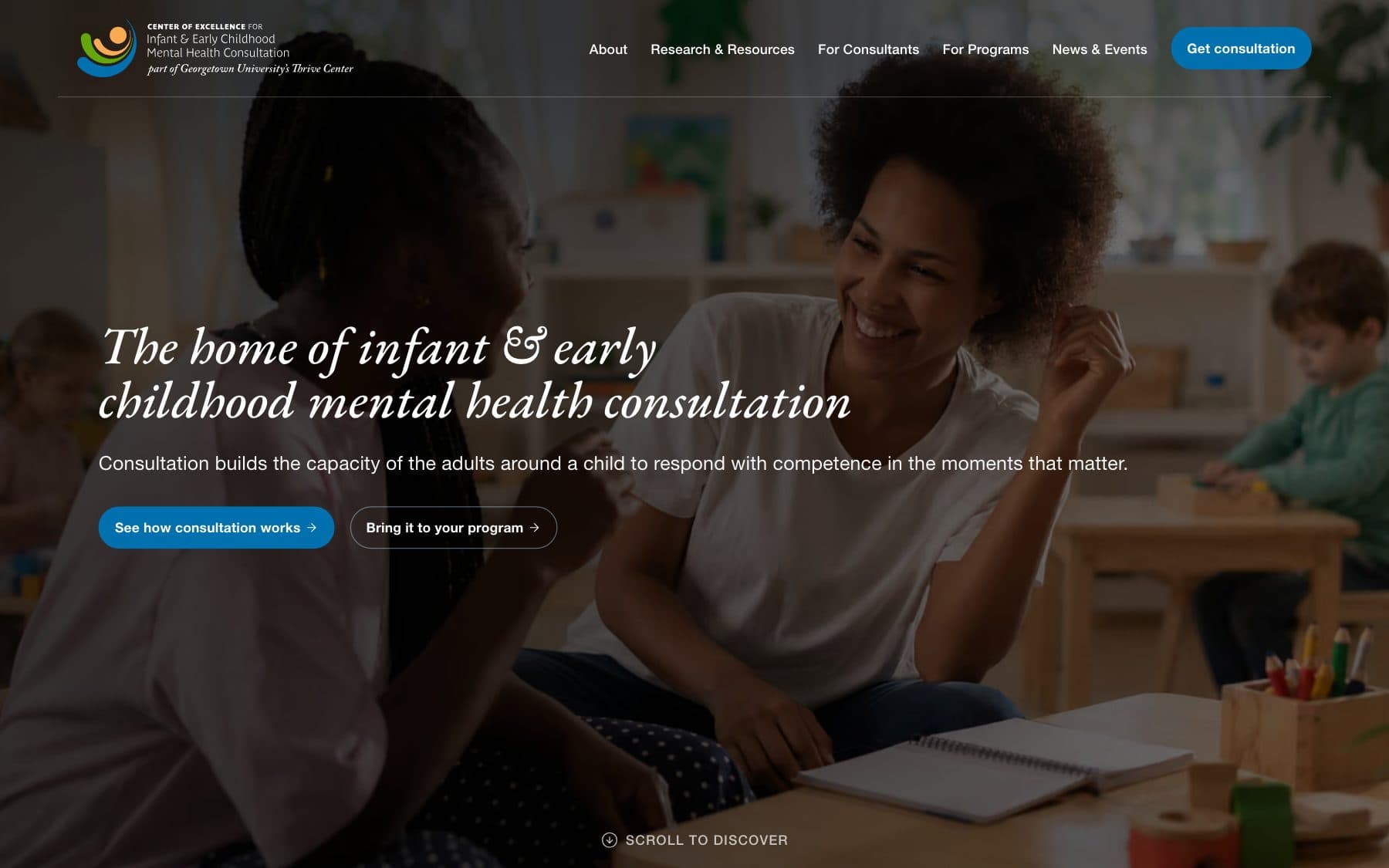
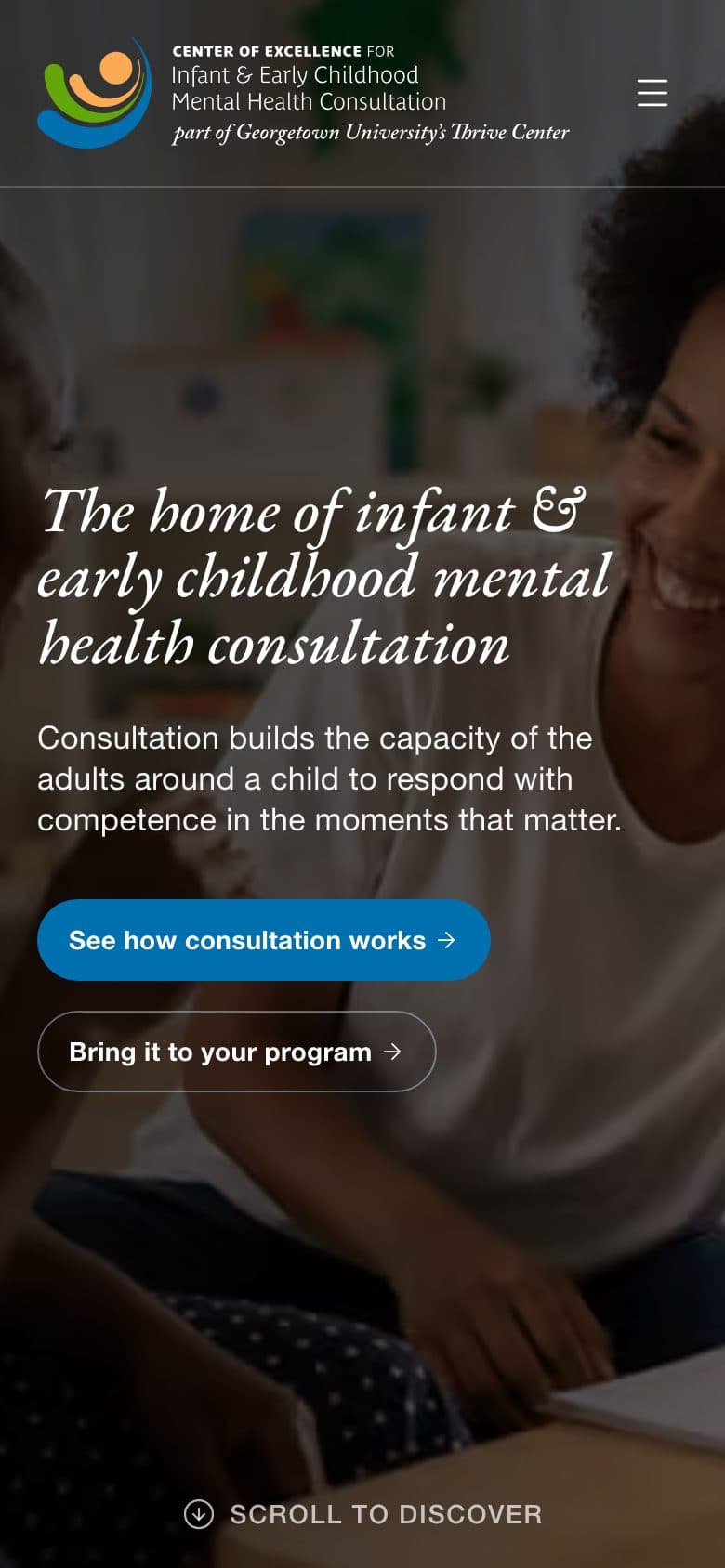
iecmhc.org is the home for the field of infant and early childhood mental health consultation (IECMHC), an intervention model born at Georgetown University and implemented in early childhood settings in all 50 states and DC. The site was designed to be the biggest research and resource repository for the field. We rebuilt and redesigned it from the ground up: design system, pages, courses and tools, all with a senior team directing AI agents from first commit to launch.
- Website rebuild
- AI-driven build
- Content migration
- Accessibility
At a glance
- Client
- Center of Excellence for Infant and Early Childhood Mental Health Consultation. By Attunify Inc and Georgetown University’s Thrive Center.
- Scope
- Design system, build, content migration, analytics, editing with Claude
- Timeline
- July to October 2026
- Built with
- A senior team directing Claude, Anthropic’s AI
- pages live
- 583
- existing URLs, each mapped to a new home
- 534
- documents carried over
- 343
- course and learning pages
- 305
The objective
One national reference, easy to find, read and use
iecmhc.org is where people working in infant and early childhood mental health consultation go to learn the practice, find research and tools, and train. Most of them arrive from search on an inner page rather than the homepage, so every page has to work as a front door.
The objective was to rebuild the whole site on one design system: its pages, ten self-paced courses, hundreds of documents and five interactive tools. All of it built to WCAG 2.1 AA, easy for the team to keep current, and carrying over the content people rely on.
How it was built
A senior team, and an AI engineering team
People set the rules, made every judgment call and reviewed every change. AI agents wrote the code, moved the content and kept a written record of each decision. That split is how a site this size went from first commit to launch in under three months.
Rules before code
A written rulebook the agents read at the start of every session: design tokens only, WCAG 2.1 AA built by hand, an eighth-grade reading level, and never invent a statistic or a clinical claim.
Design system first
Every color, type size and spacing value came out of the Figma file into one token file. Each color pairing carries its measured contrast ratio, so accessibility was checked before the first page existed.
The prototype is the product
There was no mock-up phase. Every commit deployed to a live preview, and the client reviewed the real site, with real content and real forms, the whole way through.
Scripts for the migration, people for the calls
Agents wrote importers that read the site inventory and the previous site into the site’s content files: ten courses with their citations, 40 state profiles, a 97-term glossary. Anything that needed a human decision was written down for the client instead of guessed.
Redirects ranked by traffic
Retired pages got permanent redirects to their new homes, generated from the inventory and ordered by the traffic riding on each one, so the busiest links were handled first.
242 of 259commits co-written with AI
Every commit to the site, one mark each. Lit marks were co-written with AI; the rest are merges and hand edits.
In their words
Before I was a healthcare entrepreneur, I spent over 20 years building websites and digital experiences. The process of building this site is unlike anything I’ve ever experienced before. Hannah and Ken built a tech stack, design system, and framework that make it possible to ideate, prototype, test and iterate lightning quick and without using additional design or tech resources. I’m not going back to building sites in any other way. And neither should you.

Interactive tools
Tools that answer a program’s questions
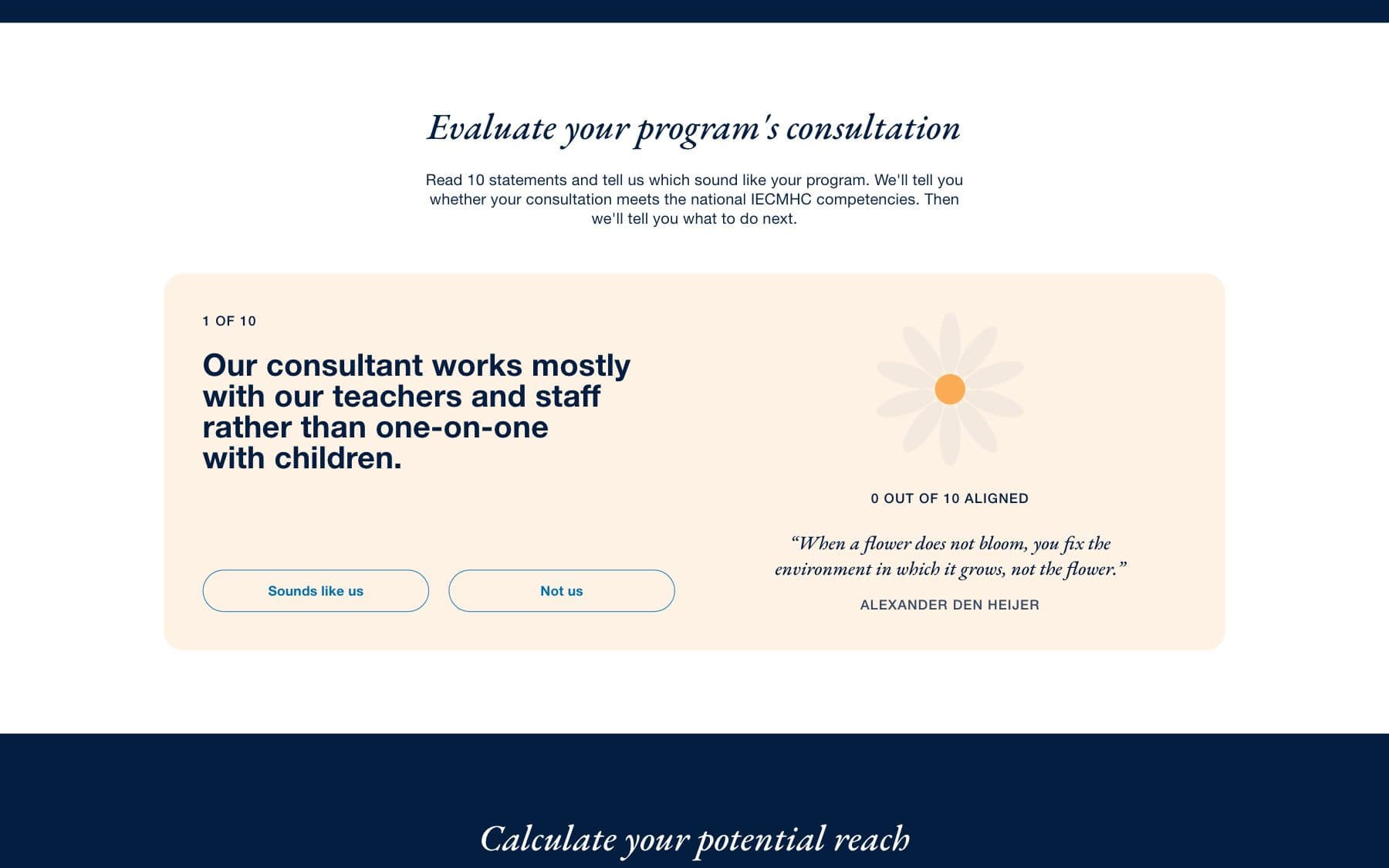
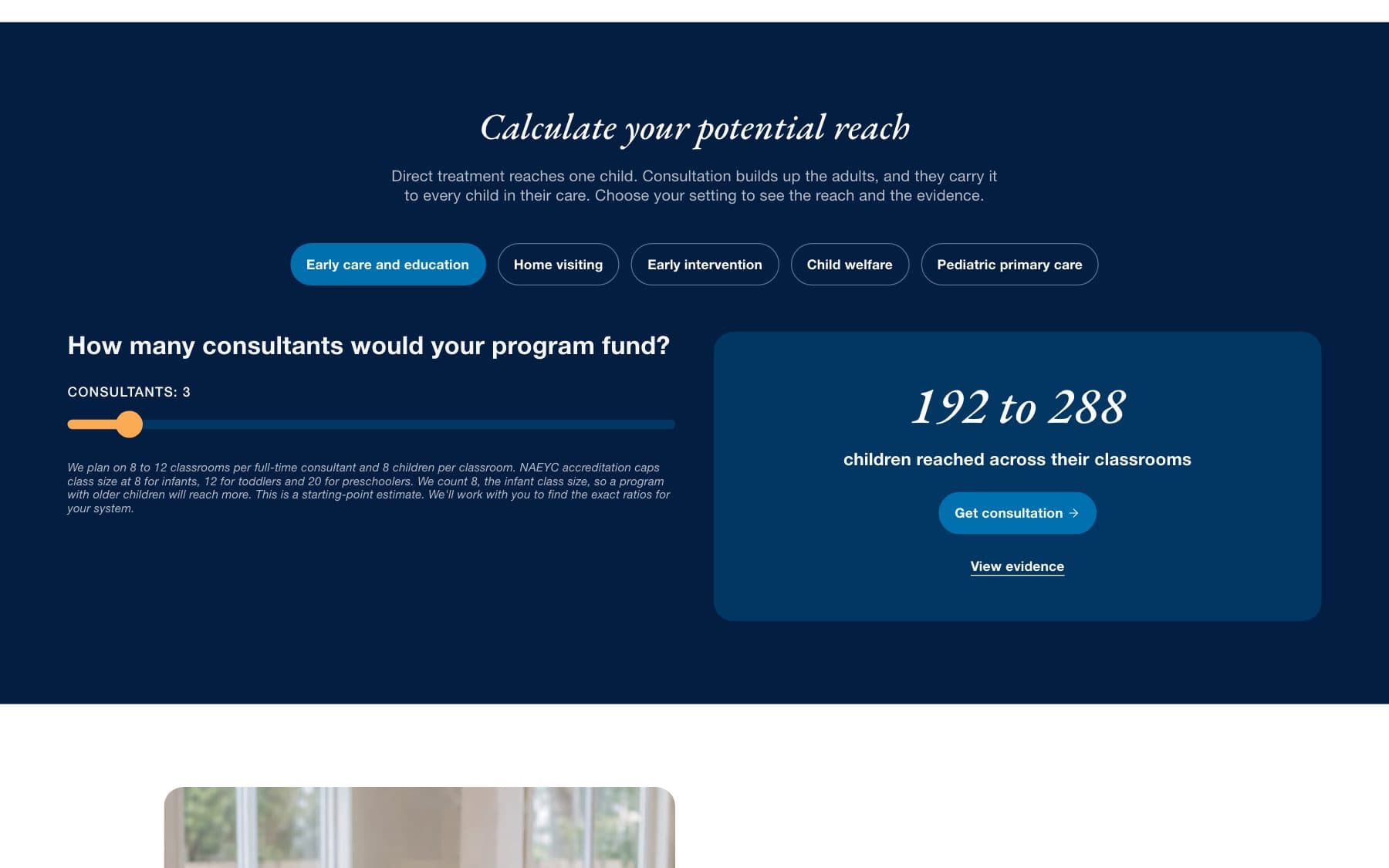
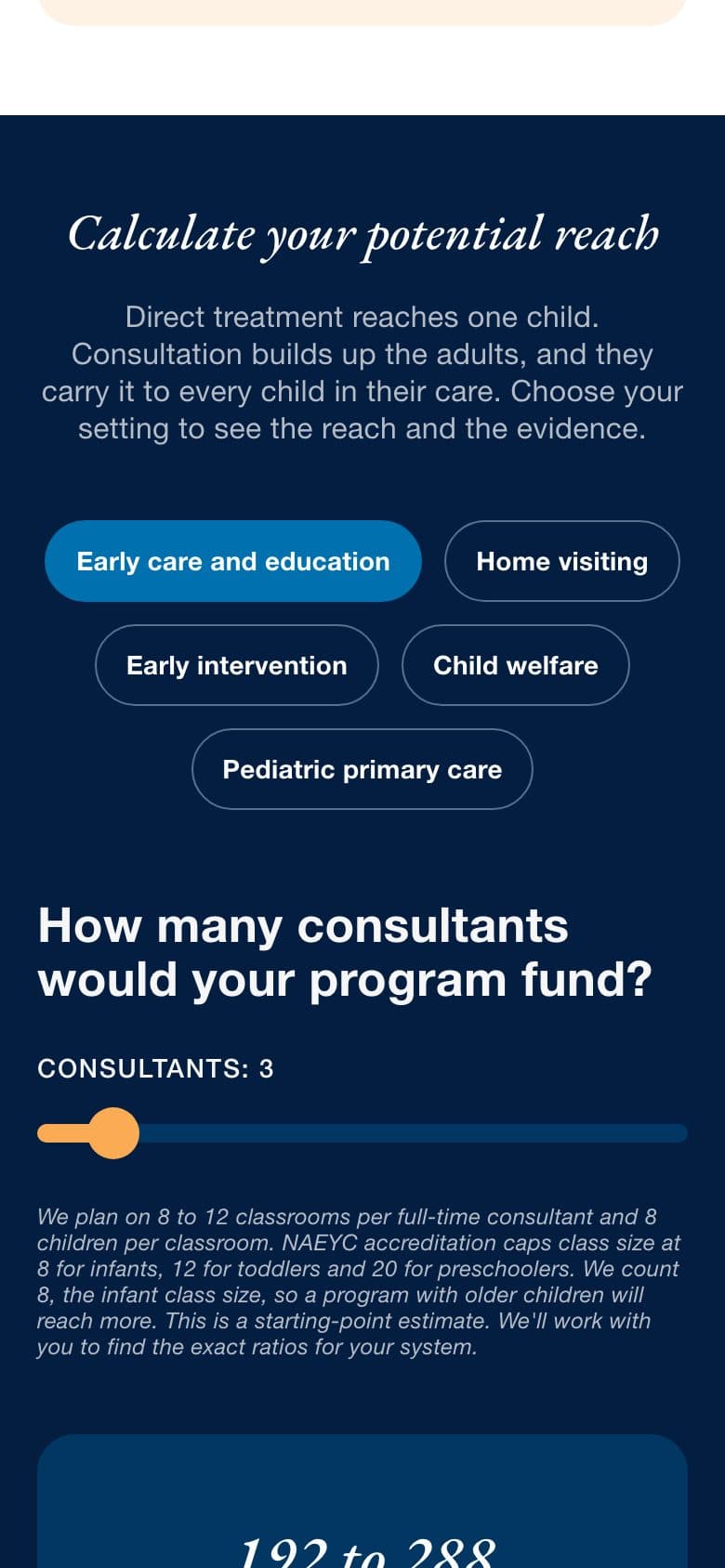
A ten-statement self-assessment shows a program how its consultation lines up with the national competencies. A reach calculator turns a number of consultants into a planning range of children reached. Both are real form controls, with results announced to screen readers.
The reference, rebuilt
Hundreds of pages on a handful of templates
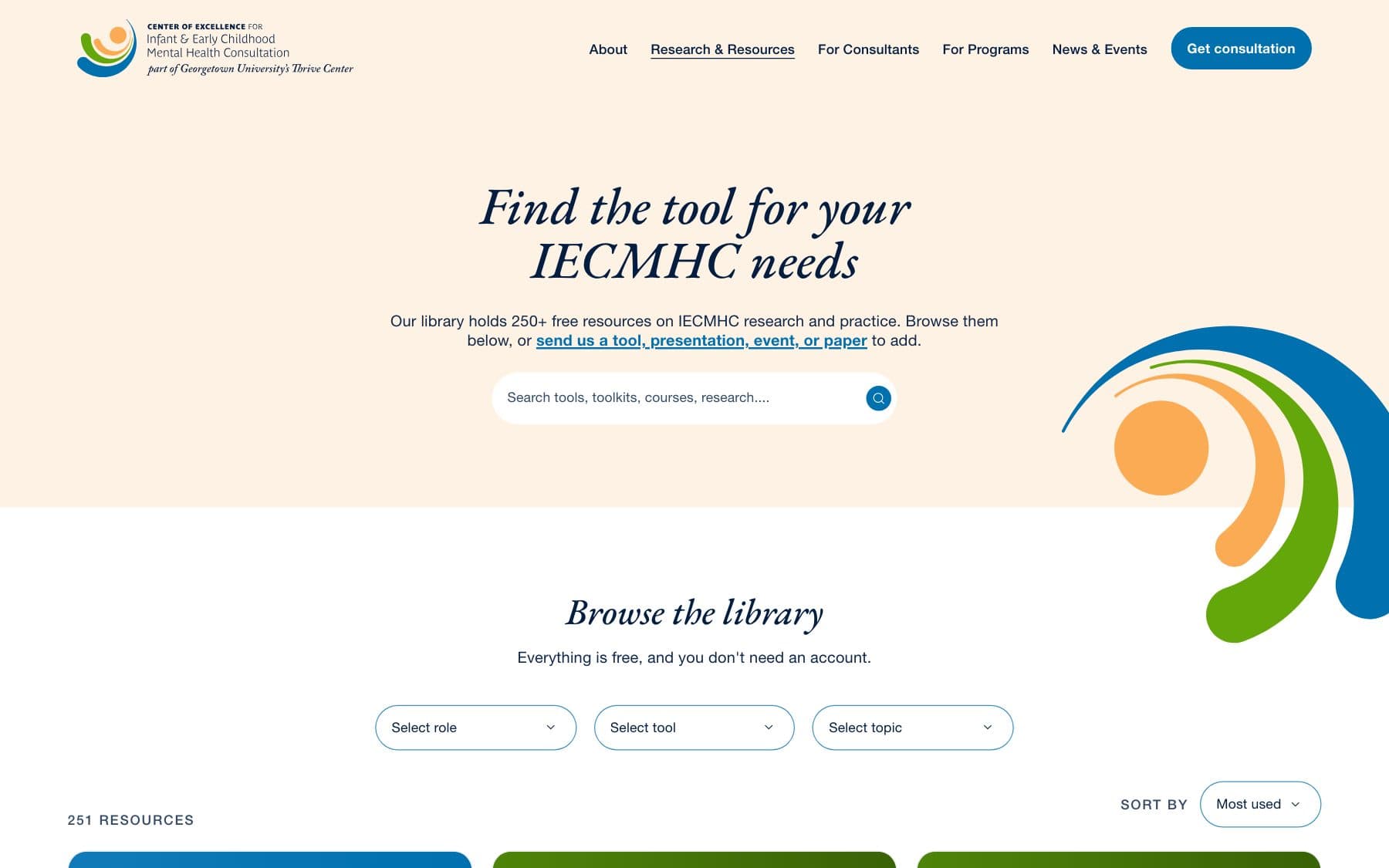
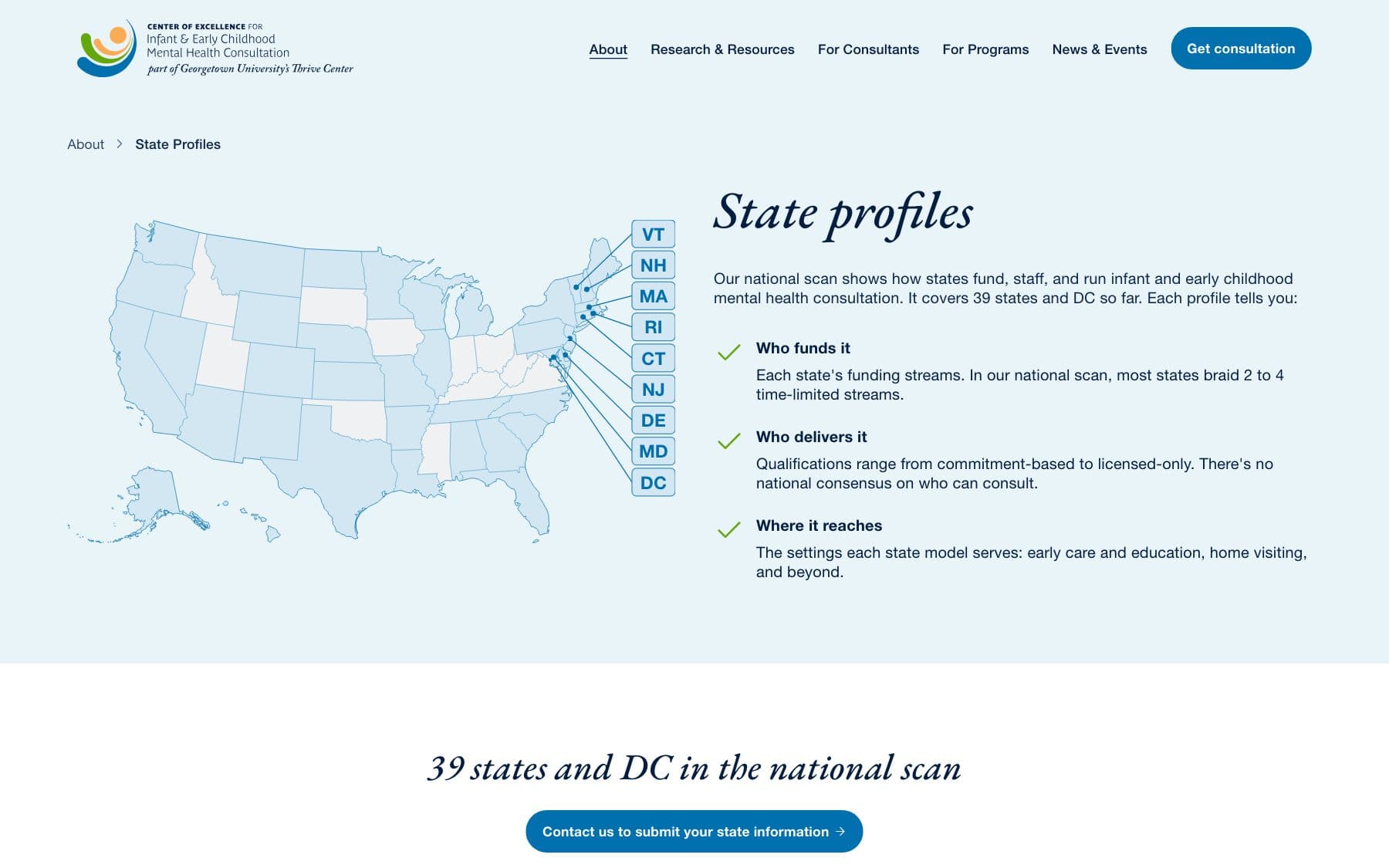
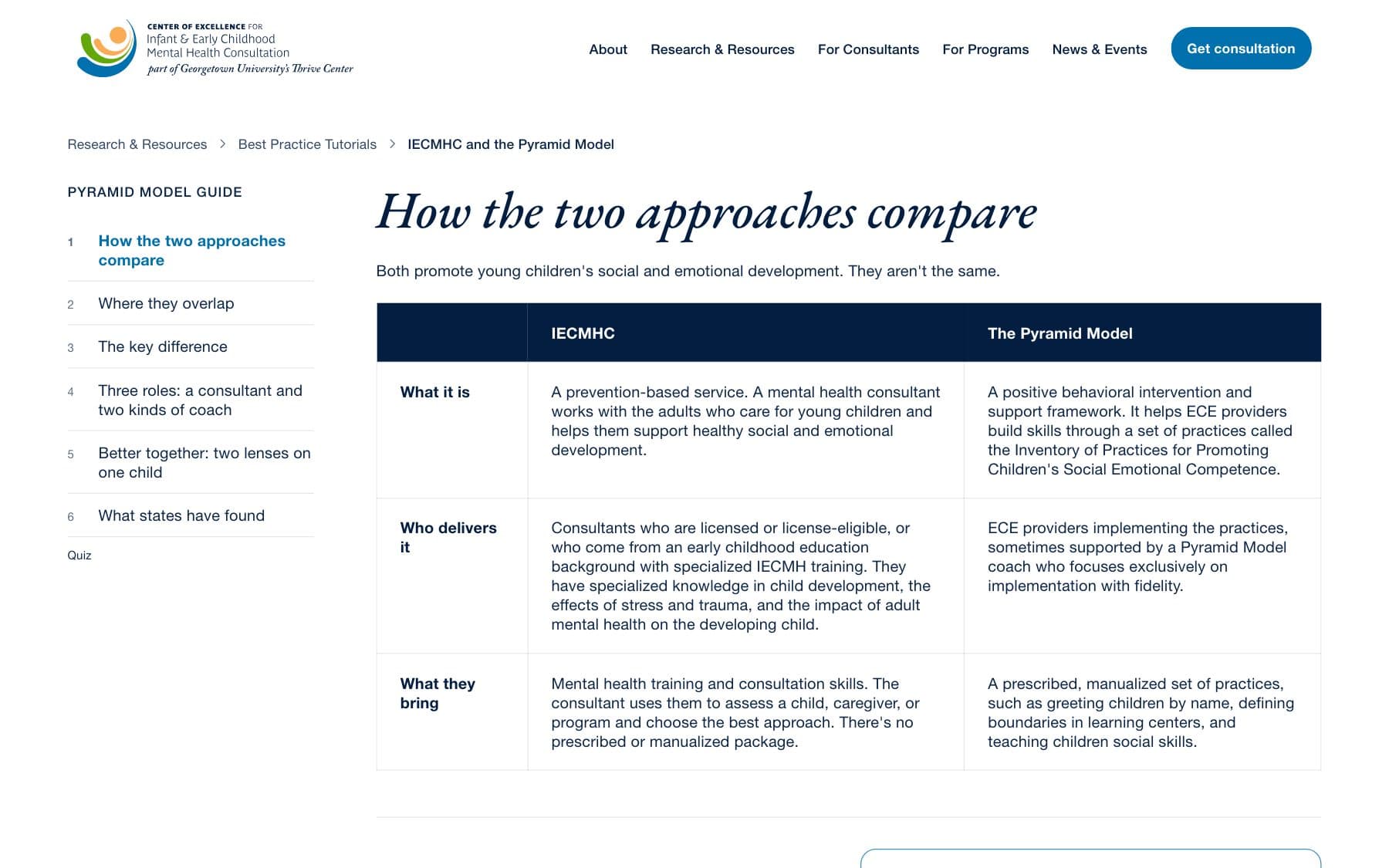
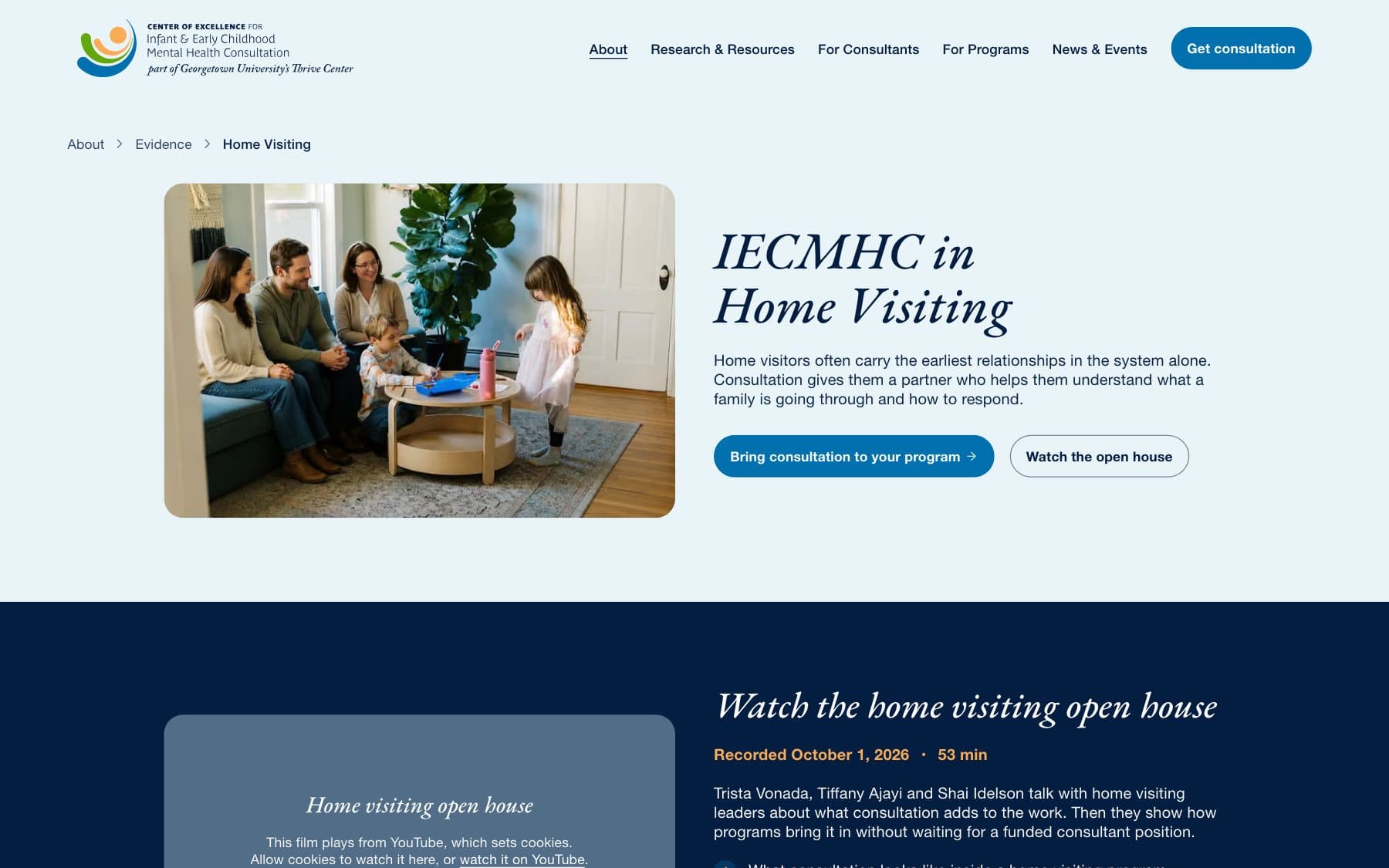
A search-first library of 251 resources, filterable by role, tool and topic. State profiles from the national scan for 39 states and DC. Ten self-paced courses on one tutorial template, and evidence pages for each setting consultation serves.
Every screen size
Built for the phone in the classroom
Every page, course screen and tool works at phone width. Everything sizes in rem, so the site’s own text-size control scales all of it without breaking a layout.
Search, schema and accessibility
Built to be found, and to work for everyone
Most visitors land on an inner page from search, so every template was built for search and accessibility from day one.
Search
100Lighthouse SEO score
- Unique titles and descriptions
- 583-page sitemap
- Share card on every page
- Redirects for existing URLs
Structured data
6schema.org types
- Organization
- Site search
- Breadcrumbs
- Events
- Courses
- News articles
Accessibility
0WCAG 2.1 AA errors across 24 pages
- Built to AA by hand
- Text-size control
- Screen-reader announcements
- Reduced motion
{
  "@type": "Organization",
  "name": "Center of Excellence for Infant and Early Childhood Mental Health Consultation",
  "parentOrganization": {
    "@type": "Organization",
    "name": "Thrive Center for Children, Families, and Communities, Georgetown University"
  }
},
{
  "@type": "WebSite",
  "potentialAction": {
    "@type": "SearchAction",
    "target": "https://www.iecmhc.org/resources?q={search_term_string}"
  }
}After launch
Their team edits the site by asking Claude
There’s no CMS to learn. The site’s words live in plain content files, and Claude works inside the same rulebook the site was built with. Their team asks for a change in plain English, and Claude finds every place it applies.
56changes made by their team in its first five days
The national scan was in 2025, not early 2026. Can you fix that everywhere it’s mentioned?
It’s on three pages. Here’s each change:
About
We conducted a national scan on the state of consultation in
removed: early 2026added: 2025.Home
We scanned the state of consultation across the country in
removed: early 2026added: 2025.State profiles
We ran a national scan of consultation in
removed: early 2026added: 2025.
What shipped
- A live site at iecmhc.org, with a preview build of every branch.
- A team that edits its own site, by asking Claude.
- Built to WCAG 2.1 AA, with a text-size control on every page.
- A documented design system, and a written record of every open decision.
Built with
- Next.js
- TypeScript
- Tailwind CSS
- Vercel
- Claude Code
It’s live. Go and look.
Visit iecmhc.org(opens in a new tab)Easy. Fast. Quality.Pick Three.
Tell us what you’re building and we’ll help you make it real.